Join the conversation
- Did you know that we have a dedicated workspace on performance management, where you can share experiences and ask questions of the Totara team or other Community users? We encourage you to join this workspace as part of completing this course, and to contribute your ideas and questions.
Reflect
This course is all about coaching, so it’s likely you want to become a coach yourself. But before you think of yourself in the role of coach, think about your experiences of being coached.
Have you ever been coached, either formally through an agreed coaching relationship or informally by a manager, friend or colleague? How was that experience? What did you gain from it? How could it have been improved?
Now think about these questions:
What makes a good coach?
What are the key pitfalls or challenges when trying to coach someone?
What is the impact of good coaching?
Are there times coaching is inappropriate, or could do harm?
Make some notes of your thoughts. If you are willing to, please share your thoughts in the Performance management workspace.
Coach or taskmaster?
As a manager, it’s your job to help your team perform to the best of their abilities. But there are different ways to approach that. Think back to the last time a team member approached you with a challenge or decision. Did you:
Tell them what to do so they could get on with it?
Have a conversation which helped them develop the skills to make these decisions independently in future?
If you did the latter, you’re already having coaching conversations. It’s a little like the saying ‘If you give a man a fish, he will eat for a day. If you teach a man to fish, he will eat for a lifetime.’ Good management is about equipping your team with the skills and tools they need to perform in their role. Building problem-solving and critical-thinking skills empowers your team to adapt to changing circumstances and make good decisions independently, raising the performance of your team as a whole.
So what is coaching? The UK CIPD define coaching as ‘the use of one-to-one conversations to enhance an individual’s skills, knowledge or work performance’. Coaching is often linked to mentoring, and the two share many of the same skills. In this course we focus on coaching, which is more specifically about job performance and can be done by someone who doesn’t necessarily have the skills to do the role being coached. A mentor is likely to be a more senior expert in a related role or field, looking to share their skills and experience with a mentee. Of course, the mentor is likely to use their coaching skills during these conversations, and many of the skills covered in this course are applicable to both situations.
So, are you interested in having more effective coaching conversations, and how to enable this using your Totara platform? Then you’re in the right place. In this course you’ll explore and practice how to:
Identify appropriate opportunities for coaching
Have effective coaching conversations
Connect individuals with an appropriate coach
Support coaching through the Totara Talent Experience Platform
To complete the course and achieve your course badge, you’ll need to complete the mandatory activities which are marked with an asterisk*, although we encourage you to explore many more of the activities available in the course.
Effective coaching for managers
Topic outline
- General
General
- Experience coaching
The best way to understand coaching is to experience it - both the good and the bad! In this activity you will compare two fictional scenarios, and see the impact coaching can have. Pay attention, because you’ll be asked to comment on the scenarios along the way…
Duration: 10 mins
In the coach’s shoes
- Now you’ve seen other coaches and their approach, it’s time to step into the coaching shoes yourself. Work through this interactive scenario and see the impact of your coaching decisions. Can you coach the team member to a successful outcome for them and your business?
Duration: 10 mins
Coaching in Totara
So, who can be a coach? The short answer is anyone. Although managers are most likely to be having coaching conversations with their teams, you can also demonstrate leadership by identifying times where you aren’t the best person for the job. Other leaders in your business or an external coach may be more appropriate. For example, a female employee aiming for a more senior role in a male-dominated technology business may benefit more from a senior female coach who can share her unique perspective than coaching from an immediate male line manager. Of course, her manager should also continue to have coaching conversations with her, in addition to any formal coaching arrangement in place.
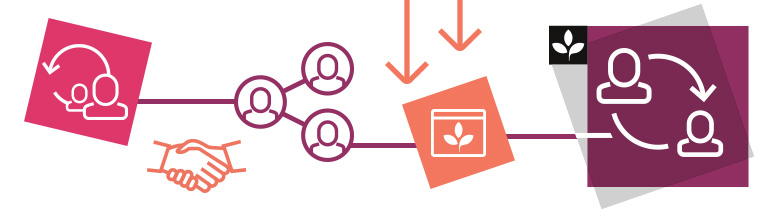
The next question is how do you identify those coaches? You will need a tool in place which enables managers and team members to identify an appropriate coach, such as a database of coaches and their skills. This could be anyone in your organisation who has received coaching training and has identified their key skills and areas of experience. You will also need to have structures in place that coaches can use, such as goals, competencies and agreed communication tools.
In the video below, you can see an example of this in action in Totara.
- This video is best viewed in full screen Duration: 5 mins
To complete the course and achieve your course badge, you’ll need to log in, or create a Community account.
- Feature focus
Feature focus
In the previous video, you experienced coaching as a coachee in Totara. But how is that experience created on your Totara site? In the videos below, you'll explore some of the features that can be combined to create this experience from an administrator's perspective, using features from across Totara Learn, Engage and Perform which form the Totara Talent Experience Platform.
Wider training is available on all of these features via the linked course underneath each video.
Collaborating in workspaces
- This video is best viewed in full screen Duration: 5 mins
- Related course: This video is taken from the Workspaces course
Assigning competencies
- This video is best viewed in full screen Duration: 5 mins
- Related course: This video is taken from the Competencies course
Adding goals
- This video is best viewed in full screen Duration: 5 mins
- Related course: This video is taken from the Goals course
Setting up the default user profile
- This video is best viewed in full screen Duration: 5 mins
- Related course: This video is taken from the Creating users course
- The wider picture
Coaching as a continuous process
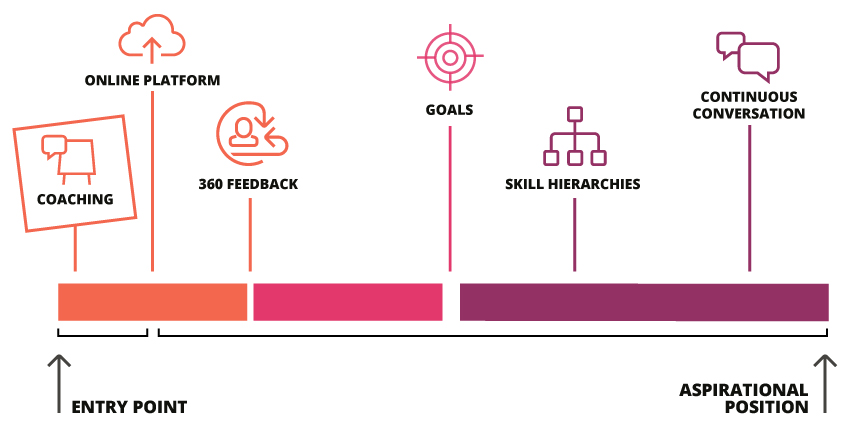
Coaching is a continuous process and should be built into the day-to-day management of your team. Along with coaching comes continuous learning and continuous performance management, meaning that coaching isn’t a one-and-done conversation. This powerful combination of informal nudges, scheduled check-ins and formal performance conversations ensures that coaching remains front of mind for both managers and employees, and keeps the entire organisation on track and working towards common goals. Successful organisations are moving towards a coach-mentor management structure which leads to a more motivated, resilient and productive workforce.
You might even consider coaching an early step in your continuous performance management journey. Embedding these behaviours helps at every stage of the performance management cycle – from 360 feedback to check-ins and more formal reviews. Coaching can help individuals achieve their competencies, the skills your business needs, meet business and individual goals, provide effective feedback to other team members and identify formal learning interventions when appropriate.
Click here to see the full diagram
Remember too that coaching isn’t just about critical feedback. As a manager, you have a powerful voice when it comes to your team. So, if you see something good, say something. In those situations, coaching can be used to extend high performance by identifying model skills and behaviours and continuing to develop them. Employees who feel that high performance is recognized are more likely to continue striving for those high standards.
- Use this brief guide to help you identify how you could enable coaching on your Totara site.
- Prove it
Test me*
- Complete this 10-question quiz to prove your knowledge of coaching. You’ve got three attempts and you’ll need a score of 90% to pass. Good luck!Duration: 15 mins
- Tell us what you think
Please spend a minute providing your feedback on this course.
- Resources
- The following resources will help you during and after the course, as you start to put your learning into practice.
Related learning:
Listen to:
Further reading: